
Leire Barayazarra: “The path towards equality in industry should not be walked by women alone – it is essential to work together to build diverse teams”

“Stopping a woman is like trying to stop the sea.” Almost five centuries ago, Lope de Vega used this phrase to highlight the strength, passion and autonomy of women in a historical and social context that was highly restrictive, not to say misogynistic.
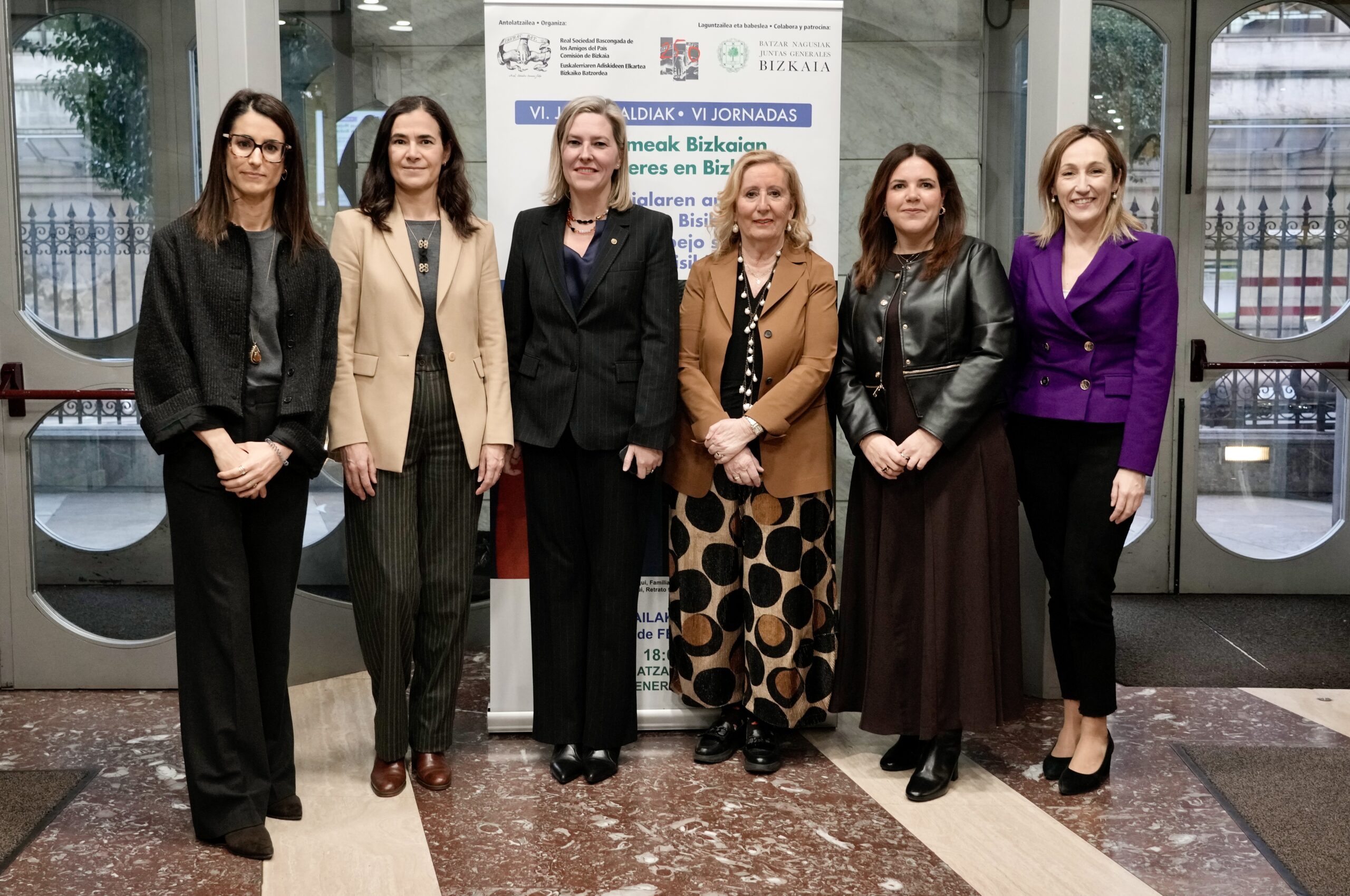
Now, in 2026, this same quote was used last Tuesday, 3 February, by Professor and Doctor of Modern and Contemporary History, Begoña Cava to introduce four outstanding female professionals whose testimonies and examples can inspire others to overcome the gender gap that still exists today in certain professional sectors.
One of these women is our colleague Leire Barayazarra, Director of Integrated Management Systems and Operational Excellence at Arania, who has developed her professional career in a traditionally male-dominated sector: that of industry.
Leire took part in the conference “Leadership and Decision-Making Roles: From Diplomacy to Senior Management”, introduced by Ana Otadui, President of the General Assemblies of Bizkaia, and José Manuel Barandiaran, Director of the Royal Basque Society of Friends of the Country, alongside diplomat Maider Makua; Leire Zarraga, Director of Human Capital at Ormazabal; and Laura Abasolo, Director of Finance and Control at Telefónica.
During her speech, Arania’s Head of Management Systems pointed out that in this sector, only 15% of technical positions are held by women, who too often experience the so-called “sandwich effect”, in which very few women work in the plant or in senior management, but a much higher female presence is found in middle management and administrative roles.
Leire explained that although Arania has a similar situation on the production floor, its management team is close to gender parity. She then outlined some of the measures the company has implemented to rectify this situation.
She highlighted the importance of working from the very beginning, collaborating with recruitment agencies to attract women willing to take on direct production roles. She went on to emphasise the need to work closely with training centres to help younger generations break down stereotypes and encourage more women to enter these types of positions.
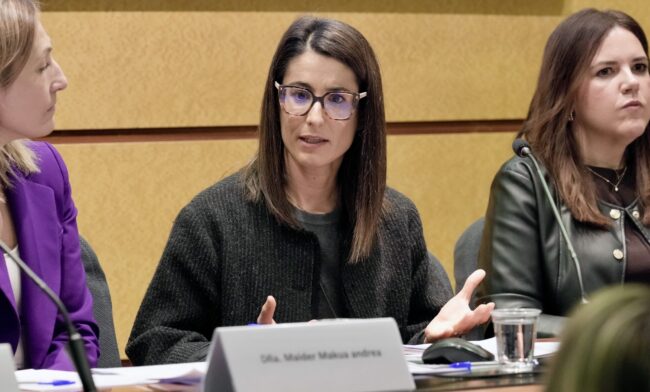
Her presentation referred to the “adventure” of launching Arania’s Equality Plan, an initiative designed to fully understand the company’s real situation without “fear of looking under the carpet”.
The work carried out by the equality committee identified small shortcomings in areas such as prevention, with PPE designed mainly for men; the company’s external image across different communication channels, which tended to prioritise men; and job advertisements that carried a masculine bias. However, it was also clear that none of these errors had been intentional.
As Leire explained, the reality was quite different: “We had not been sensitive to these points and had not adapted to the new circumstances. “Correcting these aspects went hand in hand with more far-reaching actions, starting with a training programme aimed at all employees: “We wanted the ‘awakening’ of the equality committee to extend to the entire workforce,” so that everyone could act within their own area of responsibility.
This was followed by initiatives to promote work-life balance, which are already used by 10% of male production workers, and finally a plan to progressively adapt workstations by improving ergonomic conditions.
This journey, she said, has allowed her to observe “with a sense of hope” that both at Arania and in other industrial companies, the presence of women in technical and leadership positions is becoming increasingly widespread. However, based on her own experience, she emphasised the need to extend this initiative into the future: “This path should not be walked by women alone. It is a journey for both men and women. It is essential to work together to build diverse teams and achieve successful results.”
She thus concluded her speech with a double message. First, she addressed industrial companies directly: “Do we want to lose 50% of talent, or do we want diverse teams that generate business?” She then encouraged women “to be authentic, to think about where they want to go, and to be themselves.” “There is a place for you in industry,” she concluded.
A similar perspective was shared by her fellow speakers. Laura Abasolo, Director of Finance and Control at Telefónica, encouraged women to have confidence in themselves and to “go for it” when facing professional challenges, as “there are no guaranteed formulas for success”.
She also stressed the importance of companies maintaining “open recruitment processes” and being willing to “take risks” when hiring women. Laura Abasolo added that today’s leadership style, which is “more inspirational than hierarchical”, “fits very well” with women, and highlighted the need to pursue equality “hand in hand with men”.
For her part, Leire Zarraga, Director of Human Capital at Ormazabal, highlighted the need to tackle the “impostor syndrome” that leads many women to undervalue their own achievements and mistakenly attribute success to luck. She defended female leadership, which she said stems from women’s greater capacity for empathy, more participative decision-making, and high levels of resilience and adaptability. At the same time, she called on companies to use tools that empower women and help overcome challenges such as the gender pay gap and the glass ceiling. “The most valuable thing is women who are aware of their worth and organisations committed to building diverse and inclusive environments,” she concluded.