
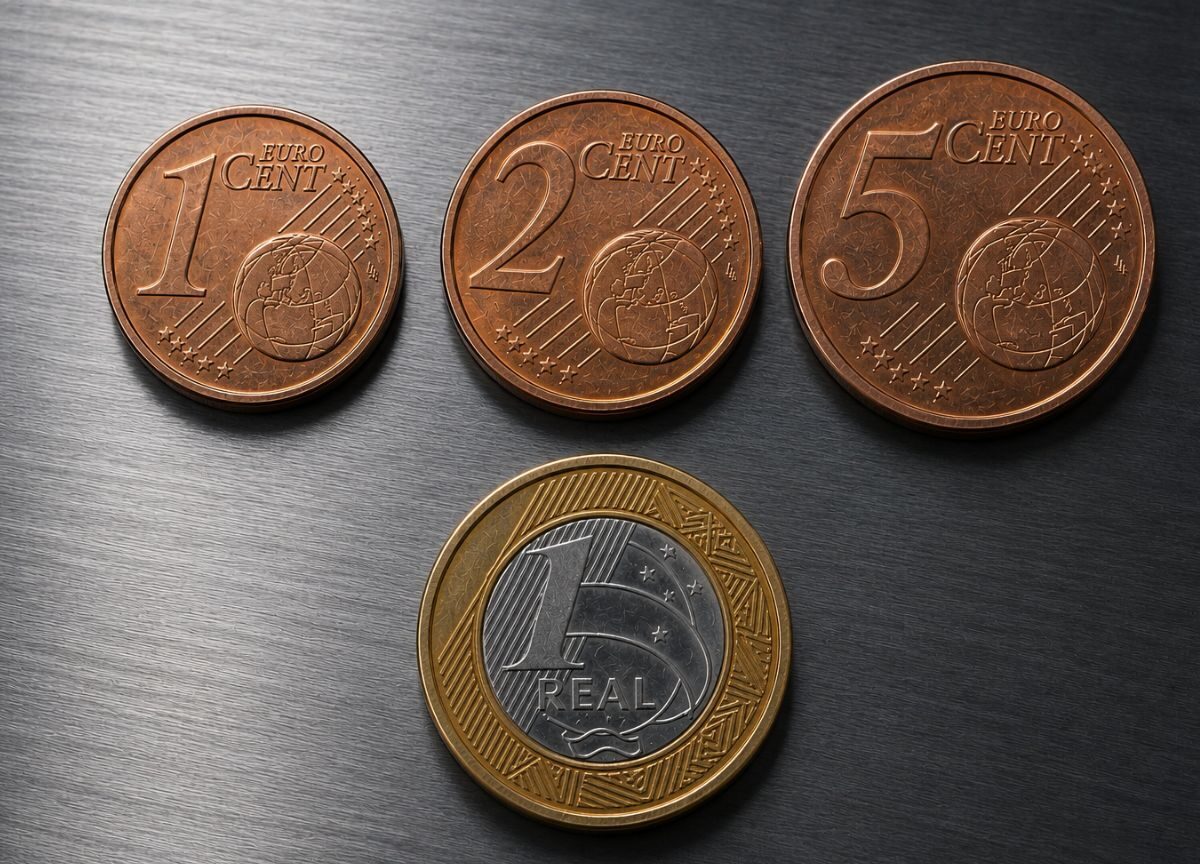
Heads or tails? and the Spanish ¿cara o cruz? or any other local variation, flipping a coin remains one of the simplest and most familiar ways of making a quick decision. With the rapid rise of digital payments, some people may wonder how much longer coins will remain part of everyday life. Yet a glance at the coin toss before a football match or any number of daily transactions around the world is enough to show that coins – and therefore their production are here to stay.
Rafael Mendoza, Arania’s Product Development and Technical Customer Support Manager, has no doubts about the future of the sector:
“The coin manufacturing market remains a highly stable sector with a strong future, and Arania has been part of it for more than 20 years.”
Rafael acknowledges that across Europe, as well as in countries such as the United States and China, the growing adoption of digital payments is having an increasing impact on the use of coins. However, he also points out that many countries across Asia, the Americas and Africa continue to require large volumes of minted coins, as cash remains the primary means of payment for everyday transactions.
“It may not be a fast-growing market, but what we have seen over the past five years is that, despite the expansion of digital payments, it remains very much alive and has a solid future. It is a market that continues to perform consistently.”
What role does this sector play within Arania’s business?
“It is one of our traditional market segments.” Arania’s Product Development and Technical Customer Support Manager explains that there are currently two main types of coins: those made from steel coated with metals such as brass, copper or nickel, and those, like the euro, that are based on alloys such as cupronickel.
Arania specialises in producing the precision cold rolled steel strip that is later processed into coin blanks – the metal discs that form the base for electroplating with other metals before the final minting process.
The final destination of these steel strips remains confidential. As Rafael explains, coin manufacturing for countries around the world is a strategic industry, governed by strict security and confidentiality measures. For this reason, he cannot disclose the specific coins that contain Arania steel.
What he can explain, however, is that the steel used as the base material for these coins must meet three essential requirements:
“Firstly, it must be soft enough and have a precisely controlled hardness to ensure a high-quality minting process, allowing every detail of the design to be reproduced with complete accuracy. Secondly, it must have a bright, high-quality surface finish to ensure excellent electroplating while enhancing the final appearance of the coin. Finally, the strip thickness must be extremely precise, with minimal variation, as this directly affects the weight of the coin, which is essential for applications such as vending machines.”
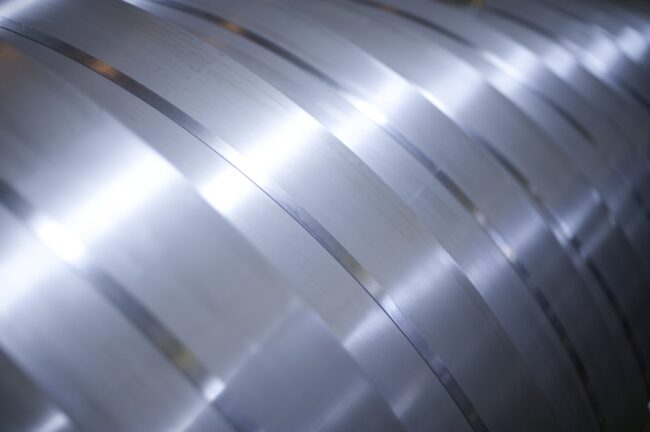
Producing the steel strip itself is also a demanding process. According to Rafael, the main technical challenge lies in achieving a surface with exceptionally low roughness while maintaining a high level of brightness. In all other key characteristics, Arania benefits from a significant competitive advantage thanks to its state-of-the-art production equipment, which delivers steel strip with outstanding thickness accuracy and highly consistent mechanical properties.
The entire process is developed by Arania’s Process and Product Technology Department, which defines the surface, thickness and hardness parameters required for each application and is responsible for ensuring a product of the highest quality with an exceptional surface finish.
Once the steel strip has been produced, it is supplied to the customer, who manufactures the coin blanks and applies the required metallic coating. The blanks are then sent to a third company, where the coins are minted with their final designs. It is at this stage that they become legal tender.
“Product quality is essential, but what our customers value most is our responsiveness, flexibility and service,” says Rafael Mendoza
In a global and highly competitive market, product quality is essential – but it is no longer enough on its own. That is why Arania’s value proposition is built not only on quality, but also on responsiveness, availability and customer service.
“What our customers value most is our responsiveness, flexibility, the availability of raw materials, our service and reliable deliveries – often even more than price. When it comes to reliability, we are among the industry leaders. These factors carry far more weight than price because our customers know they can rely on both the quality of our product and the service we provide.”
This commitment to customer service is also one of the reasons why Arania chooses not to participate in large-scale tenders involving very high volumes and long delivery schedules.
“We prefer to work directly with our customers rather than compete for very large contracts. We are most effective when supplying smaller volumes, allowing us to focus on what we do best: delivering outstanding quality and service. Taking on large orders with extended delivery times also involves greater risks. That is why flexibility and service remain the cornerstones of our value proposition.”
This approach has enabled Arania not only to retain, but also to strengthen a loyal customer base within the coin manufacturing sector over the past decade. Today, it is one of the company’s four most important market segments.
Rafael poses a rhetorical question:
“How is that possible at a time when digital payments are growing so rapidly?”
His answer is straightforward:
“Our direct customers are based in Europe, but they export coins all over the world – to Africa, the Americas and Asia. Many countries still rely heavily on cash, and millions of people do not have easy access to the internet or digital payment systems, making coins essential for everyday transactions. Even in markets where digital payments are becoming increasingly common, most of us still like to have a Plan B – and that Plan B is cash.”
Although Arania’s Product Development and Technical Customer Support Manager prefers not to reveal which specific coins contain the company’s steel, he concludes with a statement that perfectly reflects Arania’s long-standing expertise in this sector:
“Any coin in the world that is attracted to a magnet could contain Arania steel.”